
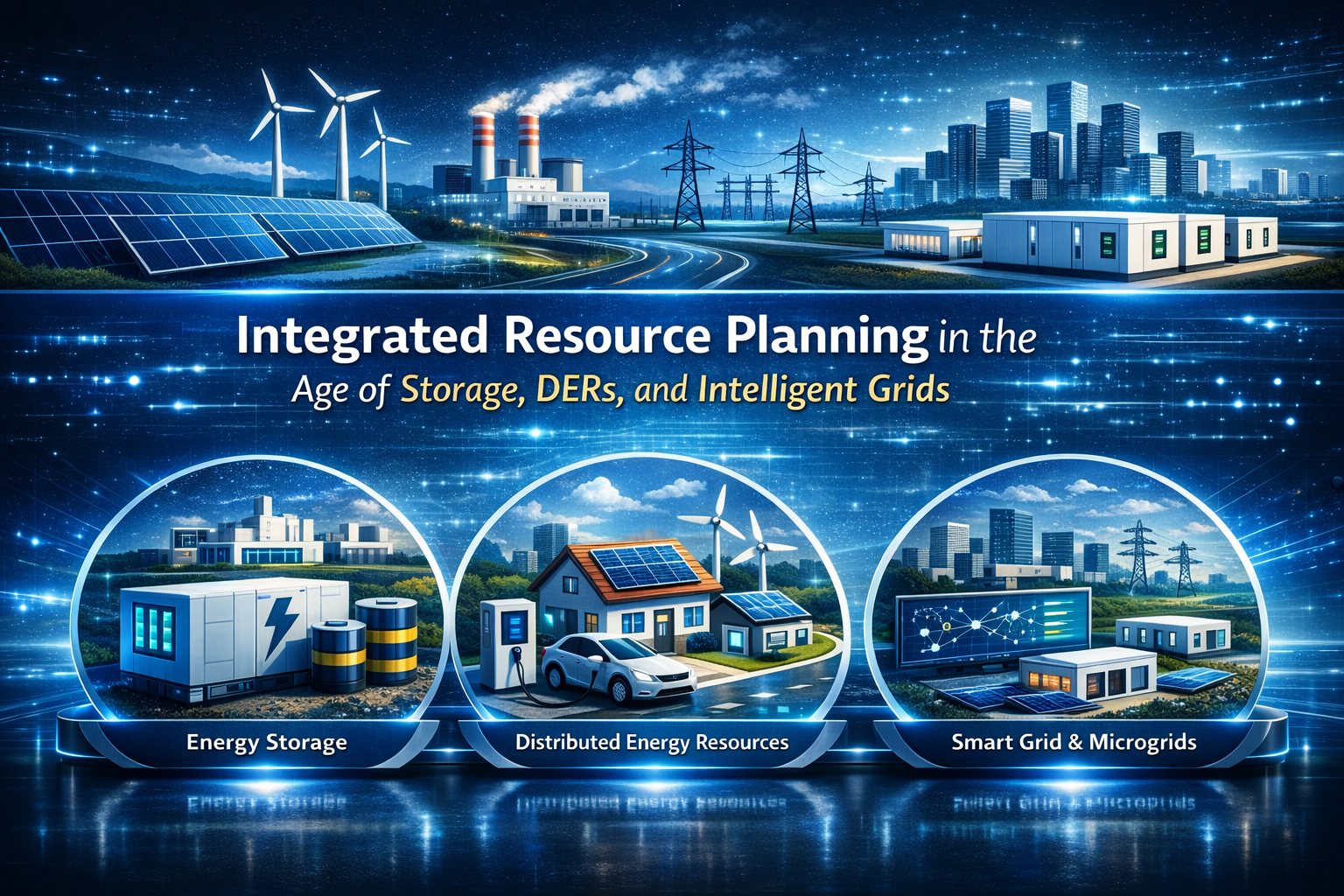
Integrated Resource Planning (IRP) used to be a fairly contained exercise. Planners forecasted demand, compared generation options, and selected the least-cost path to meet peak load. For decades, that approach worked because the grid itself was predictable.
That world no longer exists.
As power systems decarbonize, decentralize, and digitize, IRP is quietly transforming. What was once a long-term capacity planning tool is becoming something much more dynamic: a probabilistic framework that must account for flexibility, resilience, intelligence, and real-time behavior across the grid.
Energy storage, distributed energy resources (DERs), hybrid systems, microgrids, and virtual power plants are not just new resource types added to a planning model. They fundamentally change how adequacy, reliability, and cost effectiveness must be evaluated.
From Capacity to Capability
Traditional IRPs were designed to answer a simple question: how much capacity do we need to keep the lights on at peak demand? In a fossil-based system with dispatchable generation, that question was sufficient.
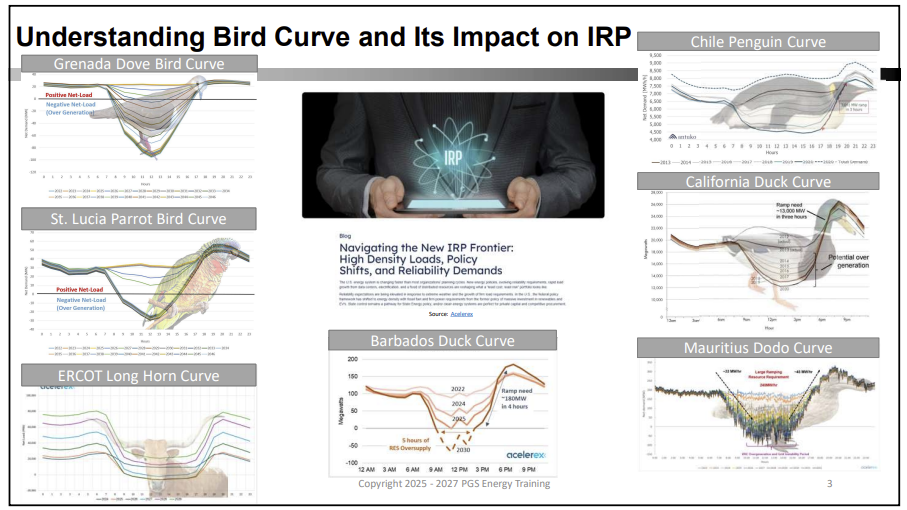
Today’s grid tells a different story.
Variable renewables introduce sharp net-load ramps. Electrification adds uncertainty on both the supply and demand sides. Policy and market rules increasingly value emissions reductions, resilience, and performance during extreme events.
Energy storage makes this shift impossible to ignore. A battery is not just a generator. It is also a load, a reserve, and a grid stabilizer. Its value depends on timing, state of charge, and control strategy.
✓ Reliability is no longer defined by nameplate capacity
✓ Performance during stressed hours matters more than annual averages
When IRPs rely on static capacity expansion models, they often capture the costs of storage while missing many of its most valuable system contributions.
Why Storage Forces a New Kind of Modeling
Storage pushes IRPs to become more operationally honest. To value it correctly, planners must move beyond annual averages and represent how the grid actually behaves over time.
This shift requires:
✓ Chronological, time-linked modeling that captures real charge and discharge behavior
✓ Explicit tracking of state of charge, degradation, and lifecycle performance
✓ Recognition of multi-service value stacking across energy, capacity, and ancillary services
Capacity accreditation methods such as Effective Load Carrying Capability (ELCC) are gaining traction for this reason. They focus on what truly matters: whether a resource can deliver during system stress events.
DERs and the Expanding Planning Boundary
Distributed Energy Resources blur the line between supply and demand. Rooftop solar, behind-the-meter batteries, EV charging, and demand response reduce net load, but they also introduce behavioral uncertainty and locational complexity.
When coordinated and aggregated, DERs can provide real system value.
✓ DER portfolios can behave like dispatchable capacity through aggregation
✓ Distribution-level flexibility increasingly influences bulk system reliability
Modern IRPs must move beyond simple net-load adjustments and explicitly model DERs as active participants. This also requires closer alignment with distribution planning processes and market frameworks enabled by policies such as FERC Order 2222.
Hybrid Resources: Designed for Flexibility
Hybrid resources show what happens when flexibility is designed into the asset itself. By combining generation with storage, whether solar plus storage, thermal plus storage, or geothermal plus storage, these systems can respond faster and more efficiently to grid needs.
✓ Hybrids enable energy shifting, fast frequency response, and congestion relief
✓ Stacked services improve both system value and asset economics
In IRPs, hybrid systems deliver the most value when their operational logic is modeled explicitly, rather than treating each component as an independent resource.
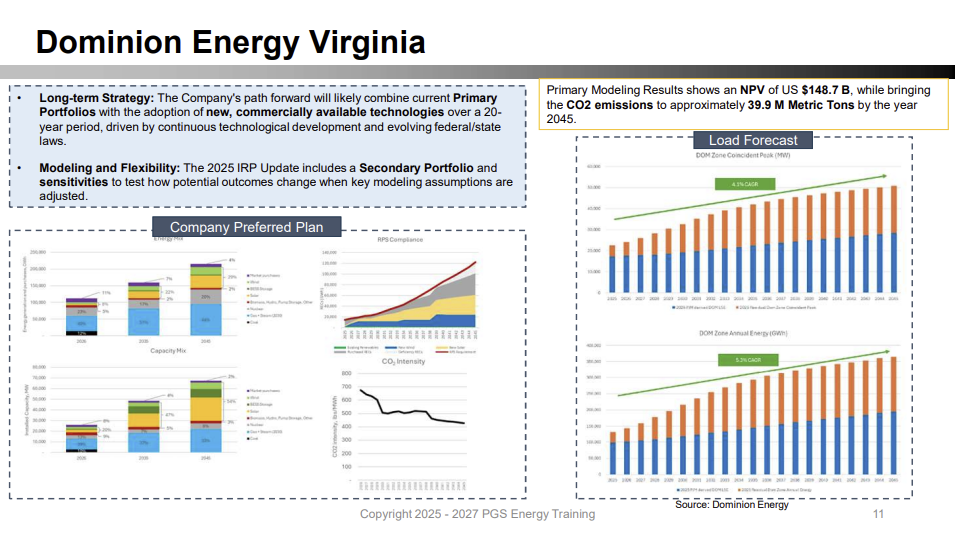
This shift is already playing out in real-world Integrated Resource Plans.
Microgrids and Non-Wires Alternatives
Microgrids and non-wires alternatives are reshaping how planners think about infrastructure investment. In many regions, utilities are deferring large transmission upgrades by deploying targeted combinations of DERs, storage, and advanced controls.
From an IRP perspective, these solutions deliver:
✓ Resilience for critical loads
✓ Local reliability under weak grid conditions
✓ Avoided or deferred capital infrastructure investments
Evaluating these benefits requires planning frameworks that compare non-wires solutions and traditional transmission on equal economic and reliability terms.
Why Intelligence Matters
As resources become more flexible, control systems become just as important as physical assets. Energy Management Systems, AI-based forecasting, and market-aware dispatch engines turn theoretical flexibility into real-world performance.
For IRPs, this means acknowledging that:
✓ Forecast accuracy directly influences system economics
✓ Operational intelligence acts as a multiplier on asset value
Long-term planning assumptions must increasingly reflect how assets will actually be dispatched in real time.
The most important shift underway is subtle but profound. IRPs are evolving from tools that plan assets into frameworks that orchestrate systems.
The next generation of IRPs will be:
✓ Chronological and probabilistic
✓ Capability-driven rather than technology-driven
✓ Integrated across bulk power, distribution, and markets
✓ Aligned with policy, resilience, and decarbonization goals
Utilities and regulators who embrace this evolution will be better positioned to navigate the clean energy transition with confidence. Not just reliably and affordably, but intelligently.
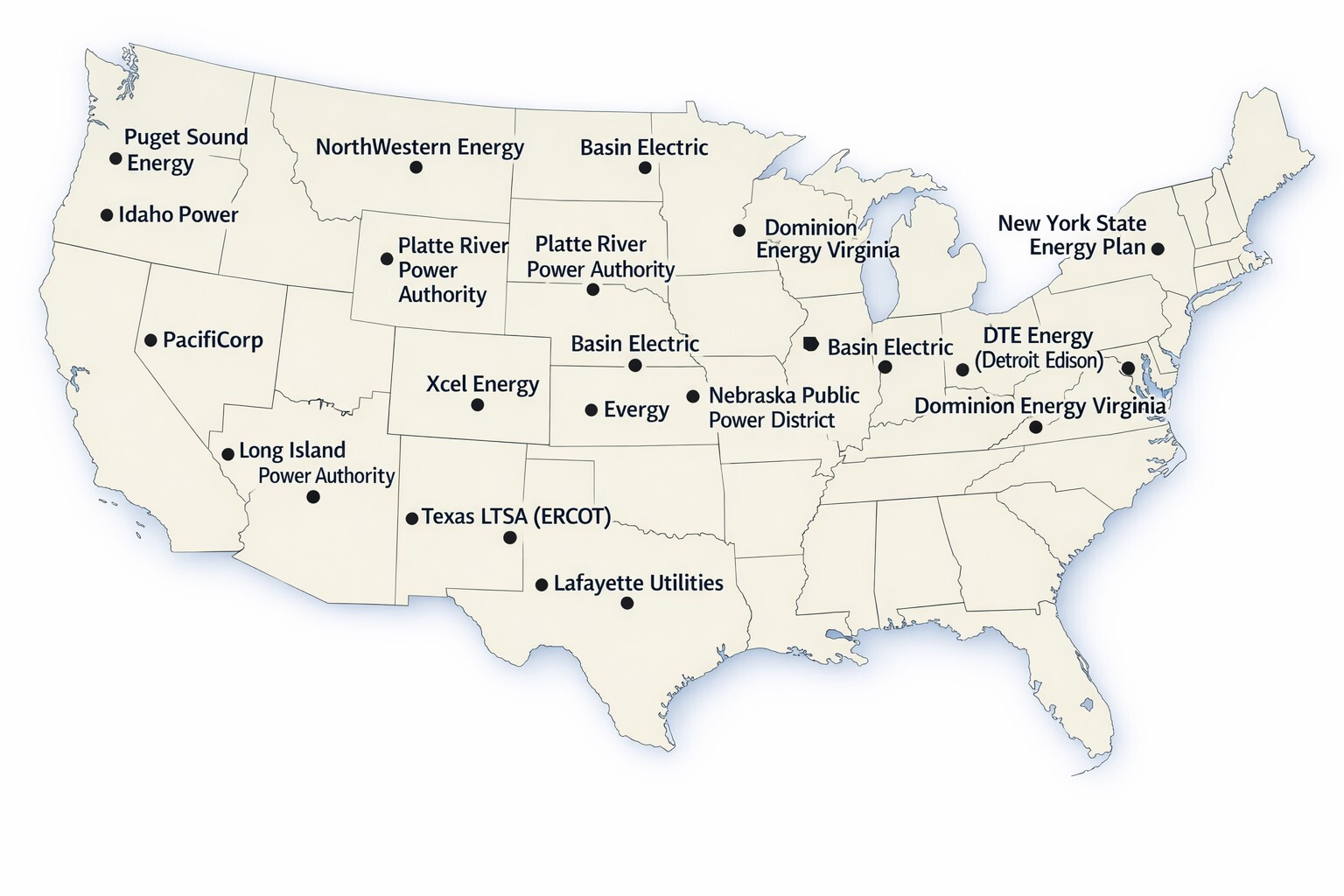
Recent Integrated Resource Planning case studies across the U.S. show how quickly the discipline is evolving. As power systems decarbonize and diversify, IRPs are moving beyond static, least-cost capacity planning and becoming probabilistic, scenario-driven frameworks. Planners are increasingly focused on uncertainty, system flexibility, and how resources actually perform under stress. High renewable penetration reshapes net load, electrification adds demand volatility, and extreme events test grid resilience in ways traditional models were never designed to capture.
Across these case studies, reliability is no longer defined by nameplate capacity alone. Energy storage, hybrid resources, and distributed energy portfolios behave as both supply and demand, with value that depends on timing, coordination, and control. As a result, modern IRPs rely more heavily on chronological modeling, capacity accreditation methods such as ELCC, and explicit treatment of operational flexibility. Microgrids, non-wires alternatives, and DER aggregation are also expanding the planning boundary beyond the bulk system, signaling a broader shift from planning static assets to orchestrating dynamic, intelligent power systems.
___
Sources and References:
¹ Several of the themes discussed in this blog draw from recent Integrated Resource Planning training led by Acelerex CEO Dr. Randell Johnson, in partnership with PGS Energy Training. These topics were explored in depth during a two-day, CPE-approved classroom seminar on Integrated Resource Planning held on December 9, 2025.